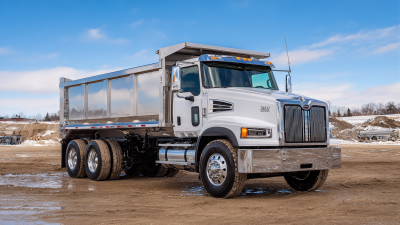
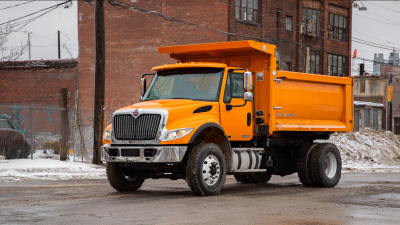
When it comes to construction and transportation, the Single Axle Dumptruck really shines because of its versatility and efficiency. I spoke with John Smith, an expert over at Heavy Haul Solutions, and he told me, "The Single Axle Dump is pretty much a game-changer for small to medium-sized projects." It strikes a pretty good balance between size and capacity, making it super handy.
These trucks are nimble enough to weave through tight spots on a busy site, yet they can still handle a decent amount of material—think gravel, asphalt, you name it. That kind of flexibility is why lots of contractors prefer them. But here’s the thing: not everyone using these trucks is getting the most out of them. Some folks miss the importance of proper loading techniques, which can actually end up making things less safe and less efficient.
Overall, while they have a lot going for them, Single Axle Dumps need to be chosen carefully. Picking the right model means understanding exactly what your project needs and how much weight you’ll be hauling. Going in with the wrong truck can cause more problems than it solves, so a little bit of planning upfront can make all the difference in making your project run smoothly—and successfully.
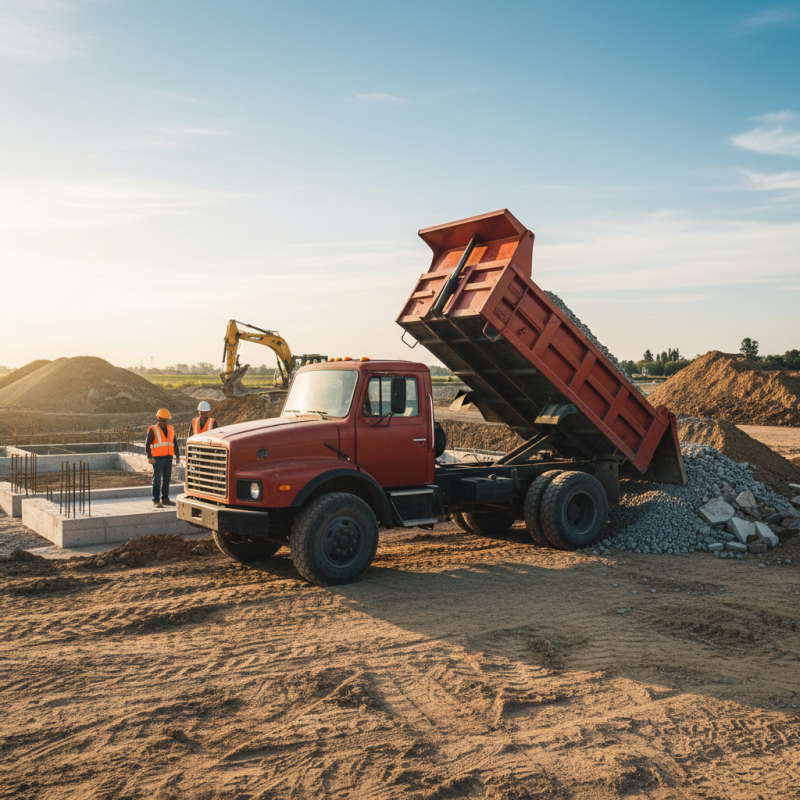
What is a Single Axle Dump Truck?
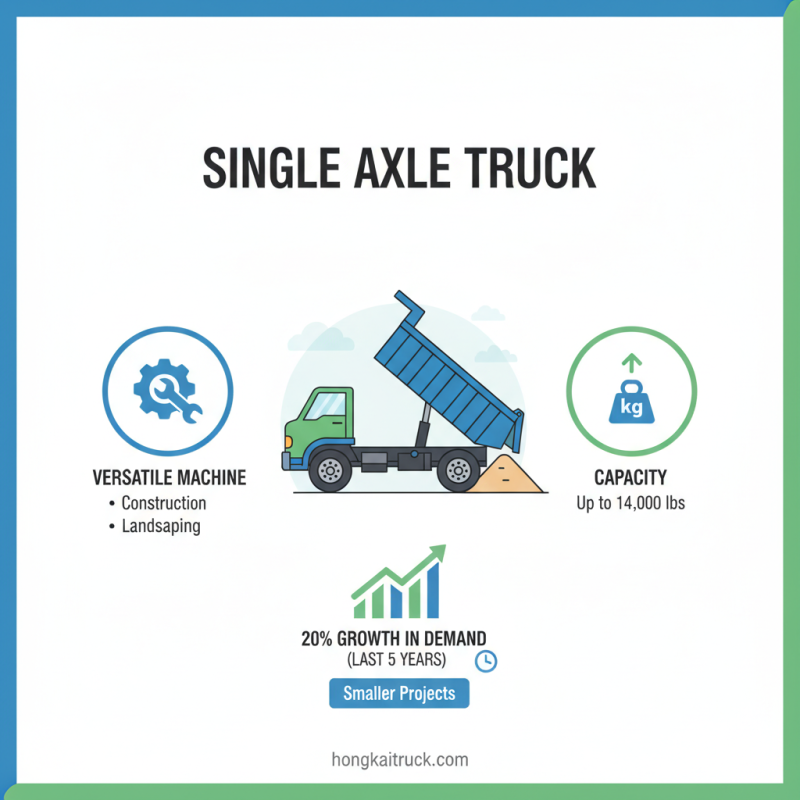
A Single Axle Dump Truckis a versatile machine often used in construction and landscaping. It features a single axle, enabling it to carry loads up to 14,000 pounds. This makes it suitable for smaller projects where a full-sized truck is unnecessary. According to industry reports, the demand for Single Axle Dump Trucks has grown by 20% over the past five years, indicating their growing popularity.
One significant advantage of a Single Axle Dump Truck is its maneuverability. It can easily navigate tight spaces and congested urban areas. The truck's smaller size allows for better access to locations that larger dump trucks cannot reach. This flexibility can save valuable time and labor costs on projects. However, it is essential to assess the weight limits carefully, as overloading can lead to unnecessary wear and tear.
Tip: Always check local weight restrictions before loading your truck. This ensures safety and compliance with regulations. Additionally, regular maintenance is key. Keeping detailed records of repairs can help track performance and identify issues early. Consider investing in a good maintenance plan for your Single Axle Dump Truck. Balancing capacity and maintenance will enhance its longevity.
Key Features of Single Axle Dump Trucks
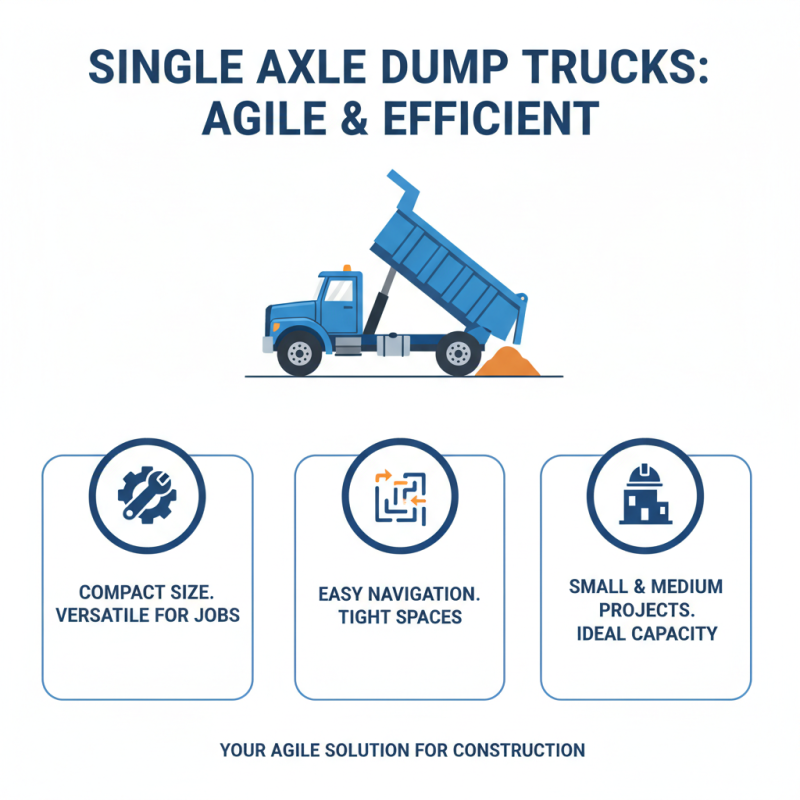
Single axle dump trucks are popular in the construction industry. Their compact size makes them versatile for various jobs. These trucks can easily navigate through tight spaces. They are excellent for small to medium projects, where larger trucks may struggle.
One of the key features of a single axle dump truck is its payload capacity. Typically, they can carry up to 10 tons of materials. This makes them ideal for transporting soil, gravel, and debris. The truck's design ensures stability when loaded, but improper loading can lead to tipping issues. Operators must be cautious to distribute weight evenly.
Another important aspect is maneuverability. A Single Axle Tipper Truck is easier to drive in urban environments. It offers better control in narrow streets. However, drivers need to be attentive. Coupled with the right skills, these trucks are efficient and reliable. But lacking experience can result in accidents or delays. Always reflect on safety practices and loading methods to ensure optimal performance.
Common Uses and Applications of Single Axle Dump Trucks
Single axle dump trucks have become essential in various industries due to their versatility and efficiency. These trucks are commonly used in construction, landscaping, and agriculture. Their lightweight structure allows them to access tight sites, making them ideal for urban projects. According to industry reports, over 65% of construction companies now utilize single axle dump trucks for transporting materials.
In landscaping, these trucks play a critical role. They haul mulch, soil, and rocks to job sites effectively. Their capacity typically ranges from 5 to 10 tons, which is sufficient for most landscaping projects. Surprisingly, 30% of landscaping businesses still rely on larger trucks, which can be less efficient. Using single axle trucks can reduce costs and improve maneuverability in small areas.
Agricultural applications also benefit from single axle dump trucks. They easily transport feed, fertilizer, and soil amendments on farms. A recent survey indicated that around 40% of farmers prefer these trucks for their adaptability. However, it's worth noting that operators may need training to maximize loading efficiency. Inconsistent loading practices lead to unnecessary delays. Choosing the right truck is critical. Ensuring the right fit for specific tasks can make a significant difference in productivity.
Advantages of Using Single Axle Dump Trucks
Single axle dump trucks are an essential vehicle in various construction and landscaping projects. They offer unique advantages that make them a preferred choice for many operators. One key benefit is their maneuverability. Their compact size allows for easy navigation in tight spaces. This is vital in urban areas where larger trucks struggle. According to industry reports, over 50% of construction sites prefer smaller trucks for their versatility.
Another significant advantage is their cost-effectiveness. Single axle dump trucks generally have lower acquisition and operational costs compared to larger models. They consume less fuel, which can lead to significant savings over time. A recent survey indicated that using single axle dump trucks can reduce transportation costs by up to 20%. This is especially beneficial for small to medium-sized businesses looking to manage expenses.
However, there are some limitations to consider. Single axle dump trucks have lower payload capacities. This means that they cannot carry heavy loads like their larger counterparts. Therefore, they might not be suitable for all projects, particularly those requiring the transport of heavy materials. Operators should assess their needs carefully before deciding on the type of dump truck. Balancing capacity and maneuverability is key to maximizing efficiency on the job site.
Comparing Single Axle Dump Trucks to Other Types of Dump Trucks
When comparing single axle dump trucks to other types, several differences stand out. Single axle trucks are generally smaller and more maneuverable. They can navigate tighter spaces better than their larger counterparts. This makes them suitable for urban construction sites and residential areas. Their size allows for easier parking too.
In contrast, Tandem Axle Dump Trucks carry heavier loads. They excel in moving larger quantities of materials. However, this comes with a trade-off; they require more space to operate. The added weight can impact maneuverability. In some scenarios, a single axle truck is just more practical. Their payload is lighter, but they often have a lower operational cost.
Single axle dump trucks bring flexibility to the table. For contractors focusing on smaller jobs, this choice can be a game-changer. Each job may demand a specific truck type. Understanding these differences is crucial for efficient project management. While single axle trucks shine in some situations, they may not always be the best fit. Reflecting on specific needs is essential.
Maintenance Tips for Single Axle Dump Trucks
Maintaining a single axle dump truck requires attention to various aspects. Focus on regular inspections to ensure optimal performance. According to the National Truck Equipment Association, neglecting maintenance can lead to costly repairs. Frequent checks of the hydraulic system are essential. Keeping hydraulic fluid at the correct level can prevent malfunction.
Tire maintenance is crucial for safety and efficiency. Regularly inspect the Super Single Tires to avoid blowouts. These tires provide better fuel economy, but they need regular checks for wear and tear. A worn tire can increase stopping distance, which is risky. It's important to maintain proper tire pressure according to manufacturer recommendations.
A clean dump bed is often overlooked but vital. Debris can cause rust and damage. Regular washing can extend the truck's life. Operators should also be aware of any unusual noises or vibrations. These signs might indicate deeper issues. A proactive approach can save money and improve reliability. Help your single axle dump truck run smoothly by adopting these practices.
Choosing the Right Single Axle Dump Truck for Your Needs
When selecting a single axle dump truck, consider your specific needs. Think about the weight you need to haul. A single axle truck works well for lighter loads. It's also ideal for smaller construction sites. However, if your project demands more capacity, look into a Tri Axle Dump Truck. It can handle heavier loads and offers additional stability.
Next, evaluate the truck's features carefully. Pay attention to the bed size and material. A durable bed can withstand heavy usage. Think about your budget. Sometimes, a more affordable model may lack essential features. It's important to find a balance between cost and capability. Don’t forget about maintenance costs too. Regular upkeep can add up over time.
Finally, consider the intended use of the truck. If you're doing general landscaping, a single axle dump truck might suffice. Yet for larger jobs, a tri axle dump truck could be worth the investment. Reflect on your long-term needs versus immediate tasks. This approach helps ensure you make a choice that contributes positively to your operations.
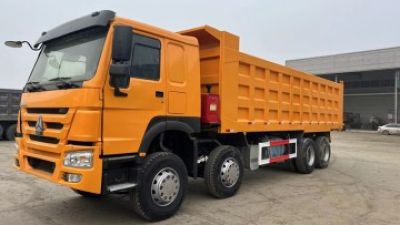
Analyzing the Market Demand for Howo Dump Truck 8*4 371-420hp: Insights from Industry Reports on Heavy-Duty Vehicle Trends
The market demand for heavy-duty vehicles, particularly dump trucks, has been on a notable rise due to ongoing infrastructure developments and construction projects globally. Among the most sought-after models are the 8×4 tipper trucks, known for their robust power and versatility. These trucks, equipped with engines offering between 371-420 horsepower, present an ideal solution for transporting heavy loads efficiently. With a durable chassis designed to withstand tough working conditions, the 8×4 dump trucks provide reliability and strength for both urban and rural construction sites.
The design of these trucks emphasizes practicality, featuring spacious cargo boxes that can handle significant volumes while remaining easy to operate. This focus on usability attracts a broad range of customers who prioritize operational efficiency and cost-effectiveness. With advanced power systems that enhance torque and engine performance, industry reports highlight how such vehicles meet the increasing demand for heavy-duty transport solutions, further reinforcing their position in the market. The competitive edge lies not only in their reliability but also in the value they offer, making them a preferred choice for many businesses in the construction and logistics sectors.
FAQS
: A single axle dump truck is smaller and more maneuverable than larger models.
They are ideal for urban construction sites and residential areas.
Single axle trucks have a lighter payload, while tandem axle trucks carry heavier loads.
Consider the weight you need to haul and the features of the truck.
Yes, regular maintenance can add up, so factor that into your budget.
No, it may not be the best fit for larger jobs requiring more capacity.
Very important; a durable bed withstands heavy usage and affects longevity.
Affordable models may lack essential features needed for specific jobs.
Your choice should align with immediate tasks and long-term needs for efficiency.
It ensures you choose a truck that positively contributes to your operations.
Conclusion
A Single Axle Dump Truck is a versatile vehicle designed primarily for transporting and dumping materials such as soil, gravel, and debris. Characterized by its single axle, this type of dump truck is often favored for its maneuverability and compact size, making it ideal for urban environments and smaller job sites. Key features include a payload capacity that allows for efficient loads and a dump bed that facilitates quick unloading.
The applications of Single Axle Dumps are extensive, ranging from construction and landscaping to road maintenance and excavation projects. Their advantages include ease of operation, lower maintenance costs, and better fuel efficiency compared to larger dump trucks, which can make them a more practical choice for many businesses. When choosing the right Single Axle Dump Truck, it's important to consider factors such as the intended use, payload requirements, and maintenance needs to ensure it aligns with specific operational demands.